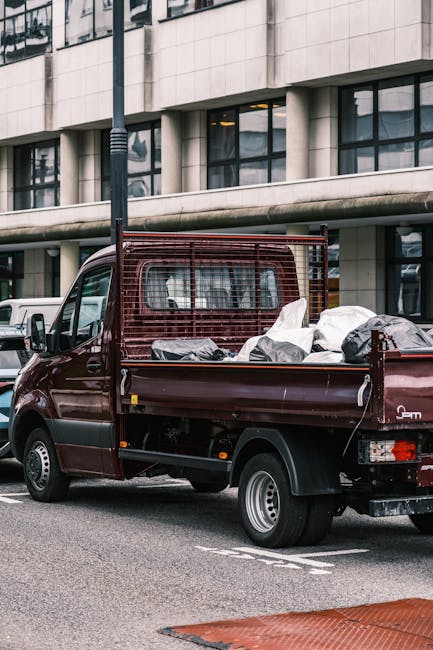
Clapton flats rubbish pick up tips for landlords

If you let flats in Clapton, rubbish pick up is never just a tidy-up job. It can be the difference between a smooth turnaround and a noisy, stressful week with complaints, missed handovers, and a stack of bags in the hallway. The best Clapton flats rubbish pick up tips for landlords are usually the simple ones: plan ahead, be clear with tenants, separate what can be reused, and use the right clearance route for the job.
That sounds straightforward enough, but anyone who has dealt with a move-out after a long tenancy knows how quickly "a few leftovers" can turn into broken chairs, bagged waste, old bedding, a mattress that nobody wants to carry downstairs, and a bin room that looks like it has had a hard month. This guide walks through the practical side of rubbish pickup for landlords in Clapton, with a focus on keeping the process efficient, respectful, and commercially sensible.
Whether you manage one flat or a small portfolio, you will find clear steps, common mistakes to avoid, and sensible ways to handle clearance without making a mountain out of a molehill. Truth be told, a lot of landlord headaches start with poor timing. Fix the timing, and half the battle is already won.
Why Clapton flats rubbish pick up tips for landlords Matters
For landlords, rubbish removal is not only about appearance. It affects void periods, tenant experience, property condition, and even neighbour relations. In a block of flats, one neglected pile of waste can quickly become a shared nuisance, especially where bins are already tight on space and everyone is doing the same shuffle with bags at the end of the week.
In Clapton, where flats often sit within busy residential streets and mixed-use buildings, speed and discretion matter. You do not want bulky items left in common areas for days. You do not want a caretaker, cleaner, or incoming tenant having to step around old furniture, smashed packaging, or black bags tied in a rush. And if the waste contains old white goods, broken fittings, or renovation debris, the stakes go up again.
The right approach also protects your margin. A rushed clearance can mean extra call-outs, damage to floors or walls, and delays to re-letting. That is why good landlords think of rubbish pick up as part of a property turnover system, not an afterthought. It sits alongside flat clearance, tenant check-out, and any final maintenance tasks.
Expert summary: the best rubbish pick up plan for landlords is one that is agreed before the tenancy ends, checked at handover, and actioned quickly enough to keep the flat ready for cleaning, inspection, and re-marketing.
How Clapton flats rubbish pick up tips for landlords Works
At a practical level, rubbish pick up for landlords follows a simple pattern. First, you identify what needs removing. Then you decide whether it is ordinary household rubbish, reusable furniture, mixed waste, or something more specialised. After that, you schedule collection in a way that suits the building, access, and timeline. Easy to say. A bit less easy when someone has left three wardrobes and a stairwell that barely turns a mattress.
Most landlord jobs in flats fall into one of a few buckets:
- End-of-tenancy rubbish left behind by tenants
- Bulky items that will not fit in standard bins
- Shared-area waste that needs prompt removal
- Pre-works clearances before decorating or repairs
- Furniture and fixtures that are no longer worth keeping
Depending on the load, you might need a general waste removal service, a more focused furniture job, or a fuller clearance of the flat. That distinction matters because a single mattress and a few bin bags are handled very differently from a full flat full of mixed contents.
Access is often the real deciding factor. Flats with narrow stairs, no lift, controlled entry, or limited parking need extra planning. If you can brief the collection team properly, the job usually feels calmer on the day. If not, you end up with the awkward kind of silence that means everybody is wondering who is carrying the heavy wardrobe down first.
Key Benefits and Practical Advantages
Good rubbish pick up planning pays off in a few very direct ways. The benefits are not glamorous, but they are real, and landlords notice them quickly.
- Faster turnaround: the flat can move from vacated to cleaned to relisted more quickly.
- Better first impressions: incoming tenants see a cared-for property rather than one left half-finished.
- Less stress for contractors: cleaners, decorators, and inspectors can work without obstacles.
- Reduced risk of complaints: neighbours are less likely to object to overflowing communal waste.
- Smarter use of resources: reusable items can be separated from genuine waste.
- Fewer repeat visits: a well-planned clearance avoids the "we missed one room" problem.
There is also a softer benefit that is easy to overlook: confidence. When you know rubbish is handled in a structured way, tenant turnover feels less chaotic. You are not guessing what is hidden behind the wardrobe or whether the hallway has been left in a state. You know what needs doing, and that is half the relief.
For landlords with multiple properties, consistent clearance habits also create a useful pattern. You can compare void jobs, estimate timelines more accurately, and build a more reliable relationship with your clearance provider. That consistency is worth more than it sounds.
Who This Is For and When It Makes Sense
This guide is for landlords, letting agents, managing agents, and property owners responsible for flats in Clapton or nearby parts of East London. It is especially relevant if you handle periodic tenant changeovers, inherited properties, or flats that sometimes come back with more stuff than expected. That happens. Often.
You will find it useful if you are dealing with:
- End-of-tenancy clearance after tenants move out
- Emergency rubbish pickup after a short-notice departure
- Longer voids where old items have built up
- Post-renovation debris in a flat before the next let
- Furniture left behind that is unsuitable for reuse
It also makes sense when you want to avoid using your own team for heavy lifting. To be fair, a landlord's job is not to drag a three-seater sofa down four flights of stairs in a rain shower. That is exactly the kind of thing better left to a clearance team with the right equipment and insurance in place, such as the team behind insurance and safety standards and clear working procedures.
If the property is larger than a standard flat, or the job starts to feel like a whole-building reset, related services such as home clearance or even house clearance may be relevant, depending on the exact setup. Not every job fits a neat label, and that is fine.
Step-by-Step Guidance
Here is the most practical way to manage rubbish pick up for a Clapton flat, without overcomplicating it.
- Inspect the flat properly. Walk every room, look in cupboards, check balcony space if there is one, and do not forget the loft hatch or under-bed storage if the flat has it.
- Separate items by type. Keep rubbish, reusable furniture, electricals, and landlord-owned items apart. It makes the collection easier and reduces accidental disposal of something you still need.
- Take photos. Before-and-after photos help with records, tenant deposits, and contractor instructions. Nothing fancy. Just clear, honest evidence.
- Check access. Measure doorways, note parking restrictions, and confirm whether the lift works. A two-minute check can save a very long morning.
- Book the right service. For mixed waste, a general waste removal option may be enough. For old chairs, tables, wardrobes, and beds, look at furniture disposal or furniture clearance.
- Set the timing around the void period. Ideally, rubbish is collected after the tenant leaves but before cleaners and decorators begin. That sequence keeps the flat moving forward.
- Confirm what happens to usable items. If there are salvageable pieces, ask whether they can be separated for reuse or recycling.
- Do a final sign-off. Once the rubbish is gone, check the space again. Small leftovers have a habit of hiding behind radiators or in corners, like they are paying rent.
If the flat contains garden waste from a small patio, shared courtyard, or balcony planters, a more specific service may be more appropriate. In those cases, garden clearance can be useful. It is one of those details people forget until the trolley is already outside.
Expert Tips for Better Results
In our experience, the best results come from boringly good organisation. Not flashy. Just tidy, predictable, and a touch firm.
1. Leave a buffer between move-out and inspection. If you can, allow a short window before the final clean. That gives you time to deal with last-minute rubbish discoveries, and there are always a couple.
2. Be strict about what counts as rubbish. Some tenants leave items behind and call them "miscellaneous storage". Nice try. Separate what is genuinely waste from what belongs to the landlord or can be reused elsewhere.
3. Keep an eye on communal spaces. In blocks, one clear flat can still create a problem if waste is parked in hallways or shared entrances too long. The collection should be efficient and discreet.
4. Think about the next task, not just the current one. If cleaners are due later in the day, rubbish pickup should happen before them. If a decorator is coming, make sure all bulky items are gone first. It sounds obvious, but schedules get muddled surprisingly fast.
5. Use reuse where possible. A decent chair, a serviceable table, or usable shelving may not belong in landfill just because a tenancy ended. A sensible clearance plan looks at sustainability as well as speed. You can read more about this approach through recycling and sustainability.
6. Keep communication simple. The cleaner, the locksmith, the agent, and the landlord all need different information. Give each person just what they need, no more. Otherwise everybody ends up with the wrong gate code and a slightly confused morning.
Common Mistakes to Avoid
A lot of rubbish pick up problems are preventable. The trick is spotting the usual traps before they cost you time or money.
- Leaving clearance too late: if you wait until the final day, you are more likely to rush and miss items.
- Assuming everything can go together: mixed waste, furniture, and electricals are not always handled the same way.
- Ignoring access constraints: a large item may be simple in theory and awkward in a narrow Clapton stairwell.
- Not documenting what was left behind: that can complicate deposit discussions and handover records.
- Using the wrong type of clearance: a small rubbish pickup is not always the best fit for a full flat reset.
- Overlooking reuse opportunities: throwing away items that could have been moved on is often wasteful and unnecessary.
One small but common landlord slip-up is forgetting about bulky items stored on balconies or in external cupboards. They are out of the way, so they get forgotten. Then one wet Tuesday morning, they are suddenly very much your problem. A proper walkthrough saves that little surprise.
Another mistake is not coordinating the pickup with building rules. Some blocks have loading restrictions, concierge arrangements, or fixed bin days that can complicate collection. Always check before the team arrives, not while they are standing there with a trolley and a sigh.
Tools, Resources and Recommendations
You do not need a huge toolkit to manage rubbish pick up well, but a few simple things make the job easier.
- Room-by-room inventory list: useful for larger flats or awkward end-of-tenancy clears.
- Phone camera: before-and-after pictures help everyone stay honest and organised.
- Basic measuring tape: handy for doors, stair turns, and bulky furniture checks.
- Clear labels or stickers: useful for separating landlord items, keep items, and waste.
- Calendar reminders: simple, but surprisingly helpful when multiple contractors are involved.
If you need a broader service picture, it can help to understand the related options on the site, especially flat clearance for full internal clear-outs and furniture clearance for bulky items that are not ordinary bin waste. For commercial landlords or mixed-use buildings, business waste removal may also be relevant where the waste stream is more operational than residential.
When a property includes storage spaces, loft access, or extra accumulation from a long tenancy, related services like loft clearance or garage clearance can help if the problem is not just inside the flat itself. Sometimes the clutter spreads. That is just how these things go.
Law, Compliance, Standards, or Best Practice
Landlords should be careful with waste handling, even for seemingly straightforward flat rubbish. In the UK, you remain responsible for making sure waste is managed properly, that it is handed to a suitable carrier, and that items are not dumped illegally. Exact obligations can vary depending on the material and the circumstances, so if you are unsure, treat caution as the default.
Good practice usually means:
- Using a reputable, insured clearance provider
- Keeping a record of what was removed and when
- Separating reusable items where appropriate
- Avoiding fly-tipping risks by not leaving waste in unauthorised places
- Taking extra care with items that may be hazardous or specialist in nature
For landlords, the practical standard is simple: the flat should be left safe, clear, and ready for the next stage. That is the baseline. If the job involves sharp debris, damp materials, electricals, or anything that looks off, do not treat it casually. Better to pause and check than to push ahead and create a mess, or worse, a safety issue.
It also helps to work with providers who are transparent about their procedures. Pages such as health and safety policy, insurance and safety, and terms and conditions give you a clearer idea of how a professional service is run. That kind of clarity matters when you are handing over access to a property and expecting the job to be done properly.
Options, Methods, or Comparison Table
There is more than one way to handle landlord rubbish pickup in a Clapton flat. The right choice depends on volume, access, speed, and what kind of waste you are dealing with.
| Method | Best for | Advantages | Watch out for |
|---|---|---|---|
| Self-managed removal | Very small amounts of bagged rubbish | Can be cheap if you already have transport | Time-consuming, lifting risks, limited disposal options |
| Scheduled waste collection | Routine waste streams and predictable volumes | Good for regularity and planning | Less flexible for bulky or mixed items |
| Flat clearance service | End-of-tenancy clears, mixed contents, bulky furniture | Efficient, broad coverage, less hassle for landlords | May be more than you need for a tiny job |
| Furniture-specific removal | Beds, sofas, tables, wardrobes, chairs | Ideal for bulky items that dominate the space | Not always suitable for mixed rubbish piles |
| Broader clearance for larger properties | Properties with extra storage or multiple areas | Useful where waste is spread across rooms and outbuildings | May be unnecessary for a simple one-room job |
In many landlord situations, the sweet spot is somewhere between "do everything yourself" and "book the biggest service going." The goal is fit, not overkill. A sensible provider should be able to guide you toward the lightest-touch option that still gets the flat properly cleared.
Case Study or Real-World Example
Here is a typical scenario. A landlord in Clapton gets keys back on a Friday afternoon. The flat contains two broken bedside tables, a mattress, several bags of mixed waste, old curtains, a bent clothes rail, and a couple of items the landlord still wants to keep for the next let. Nothing dramatic, but enough to slow things down if handled badly.
Rather than trying to sort everything in one rush, the landlord walks the flat room by room and separates keep items from waste. The collection is booked for the next morning, after access details are checked and the cleaner is moved to the following slot. The bulky furniture goes as part of a furniture disposal plan, the mixed waste is handled separately, and the flat is ready for deep cleaning by midday.
What made the difference was not a dramatic rescue effort. It was the order of operations. The flat was inspected early, the items were separated before anyone started lifting, and no one had to improvise in a narrow hallway. The whole thing felt calm, which is rare enough to mention.
That calm matters. It reduces tenant turnover stress, keeps the landlord looking organised, and helps the next viewing feel like a fresh start rather than a repair job that never quite ended.
Practical Checklist
Use this before booking rubbish pickup for a Clapton flat:
- Confirm the tenancy end date and access window
- Walk the property and note every item to remove
- Separate landlord property from waste
- Identify bulky furniture and mixed rubbish
- Check stairs, lifts, parking, and entry restrictions
- Photograph the flat before clearance
- Book the collection at the right stage of the void period
- Tell cleaners and contractors the clearance timing
- Ask about reuse, recycling, and item sorting
- Do a final sweep after collection is complete
Quick landlord takeaway: the more calmly you separate planning from lifting, the less likely you are to face delays, complaints, or avoidable costs. Simple, yes. But it works.
Get a free quote today and see how much you can save.
Conclusion
The best Clapton flats rubbish pick up tips for landlords are not complicated. Start early, sort the items properly, book the right type of clearance, and make sure the job fits the building as well as the waste itself. That approach keeps turnovers cleaner, faster, and far less stressful.
Whether you are dealing with a small end-of-tenancy job or a flat that has gathered more clutter than expected, a little structure goes a long way. Use the checklist, keep access details clear, and think one step ahead of the cleaners or decorators who follow. It really does save time.
And if the flat still feels like it is hiding one last mystery bag behind the sofa, well, that is just property life in Clapton. The good news is that it is manageable, and once it is done, the place can feel fresh again. That part never gets old.
Frequently Asked Questions
What is the best way for landlords to handle rubbish pickup in Clapton flats?
The best approach is to inspect the flat early, separate rubbish from reusable items, and arrange collection before cleaning or repairs begin. That keeps the turnaround smooth and avoids last-minute chaos.
Should a landlord clear rubbish before the cleaner arrives?
Yes, in most cases that is the smarter order. Cleaners work faster and more effectively once bulky waste, bagged rubbish, and leftover furniture are out of the way.
What kind of waste usually comes up in end-of-tenancy flat clearances?
Common items include bin bags, broken furniture, bedding, packaging, old kitchenware, and the odd item left behind in cupboards or on balconies. Sometimes it is neat, sometimes not so neat.
Can reusable furniture be removed as part of a rubbish pickup?
Often yes, but it depends on the service. If items can be reused or moved on, a furniture-focused service may be a better fit than treating everything as general waste.
How do I know if I need flat clearance rather than waste removal?
If the job is mostly bagged waste, waste removal may be enough. If the flat contains multiple bulky items, mixed contents, or a full end-of-tenancy clear-out, flat clearance is usually the better option.
What should I check before booking a collection for a flat?
Check access, stair width, lift availability, parking, building rules, and the exact list of items to be removed. A short review before booking saves a lot of back-and-forth later.
Is it worth sorting rubbish and furniture separately?
Yes. It makes collection easier, helps with reuse or recycling, and can prevent the whole job from becoming more expensive or more awkward than it needs to be.
What if tenants leave items in a communal hallway?
That should be dealt with quickly. Shared spaces need extra care because they affect neighbours and can create avoidable complaints or safety issues.
Do landlords need to keep records of rubbish removal?
It is sensible to do so. Photos, dates, and a short note of what was removed can help with handovers, maintenance records, and any later questions about what was left behind.
How can I reduce rubbish problems at future tenant changeovers?
Set expectations clearly in the tenancy process, remind tenants about what should be removed, and build a standard check-out routine. A consistent process tends to prevent repeat messes.
Are there special concerns with bulky items in flats?
Yes. Bulky items can damage walls, block stairwells, and create lifting risks. They also take more time to move, so planning access is especially important.
Where can I learn more about responsible clearance and related services?
You can review the site's pages on recycling and sustainability, health and safety policy, and pricing and quotes to get a better sense of how a professional service is structured. If you need to speak to the team directly, use the contact page.