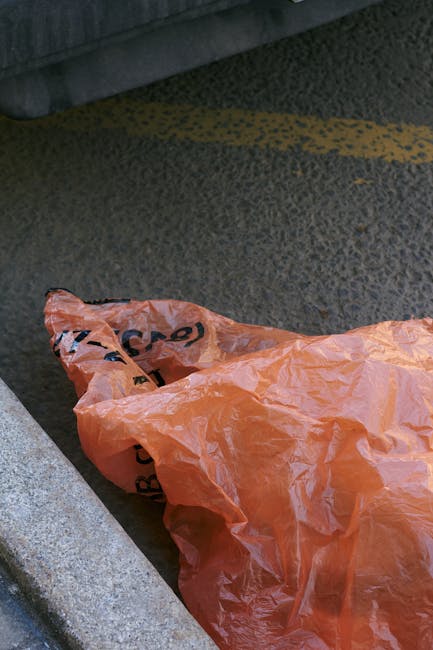
Fines and prosecutions for fly-tipping in Hackney E8: what residents, landlords, and businesses need to know
Fly-tipping is one of those problems that looks small until it isn't. A mattress left by the bins, a dumped van-load of builders' rubble, a few black bags "for later" that never get moved again - and suddenly someone in Hackney E8 is dealing with an ugly mess, a blocked pavement, or worse, an enforcement notice. Fines and prosecutions for fly-tipping in Hackney E8 matter because the consequences can land on the person who dumped the waste, the person who hired the wrong carrier, or sometimes the person who failed to check properly. That part catches people out all the time.
This guide breaks down how enforcement usually works, what fines and prosecution can look like in practice, and the habits that help you avoid trouble in the first place. If you are a homeowner, tenant, landlord, small business owner, or builder working in the E8 area, this is the kind of issue it pays to understand before it becomes expensive. Truth be told, waste compliance is a lot less glamorous than most jobs in London - but it is far cheaper than defending a careless disposal decision later.
Why Fines and prosecutions for fly-tipping in Hackney E8 Matters
Hackney is a busy, densely used part of London, and E8 has the kind of mixed residential and commercial streets where waste problems can appear quickly. A single dumped load can affect pedestrians, neighbours, shop fronts, and the general look and feel of a street. That may sound obvious, but local enforcement teams tend to treat fly-tipping seriously because the damage is not just visual. It can create trip hazards, attract more dumping, and make it harder for everyone else to manage waste properly.
For individuals and businesses, the real issue is accountability. If waste turns up where it should not be, someone may be asked to prove how it was handled. That is where people get into trouble. A lot of enforcement cases do not begin with a dramatic scene; they begin with a bag, a label, a receipt, a vehicle registration, or a missing duty-of-care record. Small gaps become big questions very quickly.
Let's face it: most people who end up in difficulty did not set out to break the rules. They were trying to save time, save money, or hand a job to "someone who knows a guy." The problem is that fly-tipping enforcement does not care much about good intentions. It cares about evidence, responsibility, and whether waste was transferred and disposed of properly.
Practical takeaway: if you can show who collected the waste, what was collected, and where it was meant to go, you are in a much stronger position than someone relying on a verbal promise and a vague invoice.
For local businesses, the stakes can be even higher. Illegal dumping can lead to reputational damage, operational disruption, and avoidable costs. If your waste handling is part of your day-to-day operations, it may be worth reviewing your processes alongside services such as business waste removal or, for larger commercial clear-outs, office clearance. A clean, documented process is boring in the best possible way.
How Fines and prosecutions for fly-tipping in Hackney E8 Works
There is no single script for enforcement, but the process usually follows a familiar pattern. Someone reports dumped waste, officers investigate, and the council or enforcement body looks for evidence that connects the waste to a person, vehicle, address, or business. In many cases, there is no need for anyone to "catch" the offender in the act. Evidence can come from packaging, address labels, CCTV, witness statements, vehicle details, or documents found inside the waste.
When the evidence suggests an offence, the next step may be a fixed penalty, a formal investigation, or prosecution. Not every case ends up in court. Not every case should. Some are resolved through fines or notices, while more serious or repeated cases can move toward prosecution. That depends on the facts, the scale of the incident, the harm caused, and whether there is a pattern of behaviour.
If you are thinking, "Surely a couple of bin bags does not matter," it is worth pausing there. The law is not only about scale; it is also about location, intent, and handling. Even relatively small illegal deposits can trigger action if they show a deliberate attempt to avoid proper disposal.
In everyday terms, this is how it often plays out:
- Waste is dumped or left in a way that appears unlawful.
- The waste is reported or found during routine patrols.
- Evidence is examined to identify the source.
- Officers decide whether a warning, fixed penalty, or prosecution is appropriate.
- The person or business involved may need to respond with records, explanations, or mitigation.
That last part matters. If you are asked to account for waste, calm and organised evidence is far more useful than a flustered phone call saying, "I paid someone cash and they said it was fine." Not ideal, that.
For people dealing with bulky items, repeated clearances, or awkward access in flats and mews properties, lawful disposal is often easier when planned properly. A proper flat clearance, for instance, is very different from trying to move furniture in a rush, at night, with nowhere legal to put it. If you need to remove old items, a lawful route through furniture disposal or furniture clearance is usually the safer path.
Key Benefits and Practical Advantages
There is a strong temptation to talk about compliance only in terms of avoiding punishment. Fair enough - that is part of it. But the practical benefits go beyond staying out of trouble.
- Lower legal risk: Proper records and responsible disposal reduce the chance of being linked to illegal dumping.
- Better cost control: Planned waste removal is usually cheaper than emergency clean-up, penalties, or legal stress.
- Cleaner premises: Homes, gardens, garages, and business sites are easier to manage when waste is cleared in one organised step.
- Stronger reputation: Landlords and businesses benefit when neighbours, tenants, and customers see a tidy, responsible operation.
- Less disruption: A lawful collection reduces the time spent dealing with complaints, inspections, or last-minute scrambling.
There is also a quieter benefit: peace of mind. You sleep better when you know the waste has been handled properly. That sounds a bit soft, maybe, but in real life it is not. People hate uncertainty around fines and prosecutions because it hangs over them. A clean paper trail removes a lot of that pressure.
Another advantage is that compliant disposal tends to be more repeatable. Once your process is working, you can reuse it. That is especially helpful for tradespeople, shop owners, and property managers who face recurring waste from refurbishments, tenant moves, and seasonal clear-outs. Services such as builders waste clearance and waste removal can help keep those jobs structured rather than improvised.
And yes, a decent system is a little boring. Boring is good here.
Who This Is For and When It Makes Sense
This topic is relevant to more people than you might expect. Fly-tipping enforcement is not just about obvious offenders dumping waste in a lane or on a pavement. It can involve ordinary residents, landlords, managing agents, independent traders, builders, shop owners, and office managers.
It makes particular sense to pay attention if you are:
- moving out of a flat, house, or shared property in E8
- clearing a loft, garage, garden, or basement after years of accumulation
- running a trade, renovation, or refurbishment job with mixed waste streams
- responsible for business premises, offices, or rental property common areas
- hiring someone else to collect waste on your behalf
- unsure whether your old disposal habits are actually compliant
In practice, the people most at risk are often the ones who assume the job is "too small to matter." That is where mistakes creep in. A landlord with a few broken items after a tenancy ends, or a tradesperson with leftover rubble and packaging, may decide to improvise. But a late-night dumping run can become evidence later. The wrong shortcut can cost much more than proper clearance in the first place.
If the job is spread across multiple rooms or storage spaces, it can help to break it down by type. For example, a home clearance may cover a mix of furniture, textiles, and everyday household waste, while a garage clearance may involve old tools, paint tins, tyres, and awkward items that need separate handling. Different waste types bring different risks, and that matters when you are trying to avoid prosecution issues.
Step-by-Step Guidance
If you want to stay on the safe side, the best approach is simple: plan the waste route before the waste leaves your property. That sounds obvious, but people often do it backwards. Here is a more sensible way to handle it.
1. Identify what you are disposing of
Start by sorting the items into broad categories. Household furniture, mixed rubbish, garden waste, builders' waste, and commercial waste should not be treated as one messy pile. The more clearly you know what is leaving the site, the easier it is to arrange the right disposal method.
2. Decide whether the waste is your responsibility or someone else's
If you have hired a contractor, ask exactly what they will remove and where it will go. If you are a landlord or managing agent, confirm whether the waste belongs to a tenant, a previous occupant, or your building team. Ownership can be fuzzy in real life, but responsibility should never be fuzzy.
3. Keep written proof
Save invoices, collection notes, email confirmations, and any vehicle or company details you were given. If a problem arises later, those records can be very helpful. Without them, you are relying on memory, and memory is a poor witness under pressure.
4. Use a legitimate disposal route
For mixed or bulky loads, a lawful collection service is usually the simplest route. Whether you need house clearance, loft clearance, or a more commercial solution like office clearance, the key is that the waste should be handled by someone who can explain their process clearly.
5. Check the aftermath
Once the waste has gone, make sure the area has been left tidy and that nothing has been dumped nearby. Sometimes issues appear not at collection time, but afterwards, when a pile has been left around the corner or on a shared passage. A quick check saves headaches.
That is the basic shape of it. Nothing flashy. Just the sort of process that keeps you out of a messy situation later on.
Expert Tips for Better Results
Here are the habits that tend to make the biggest difference in real-world waste management.
- Do not pay cash without a paper trail. If the collection cannot be traced later, you are taking a risk.
- Ask where the waste will be taken. A decent operator should be able to explain the route in plain English.
- Separate legal from illegal shortcuts. "I'll leave it by the back wall for now" is not a disposal strategy.
- Use the right service for the job. Builders' debris, garden cuttings, and old office items should not all be handled in the same loose way.
- Keep access clear. A tidy loading area reduces the temptation for rushed, half-finished dumping.
- Think ahead on timing. Early morning collections are often easier than trying to sort waste in the dark or after a long day.
One practical insight that people miss: the easiest way to avoid fly-tipping trouble is not just to "dispose of waste properly," but to reduce the number of unplanned decisions you have to make. The more you delay, the more likely someone says, "Just dump it for now and we'll sort it later." Later rarely turns out well.
If you are managing repeated clear-outs, it can also help to standardise your approach. For example, a landlord or local business might use the same disposal checklist every time and keep a simple folder of records. A small habit, but a useful one.
Common Mistakes to Avoid
Most fly-tipping problems are not caused by one huge error. They are caused by a cluster of smaller bad decisions. That is the awkward bit.
- Assuming someone else is responsible: If you arranged the collection, you may still need to show what happened.
- Hiring an unverified collector: Cheap is not always cheap if the waste ends up dumped.
- Leaving waste beside communal bins: Even if it feels temporary, it can be treated as abandoned waste.
- Mixing waste types without checking: Some items need separate handling, especially from building or garden jobs.
- Ignoring repeated small problems: Small dumping incidents can escalate into a pattern that attracts enforcement attention.
- Failing to keep records: The absence of proof is often what makes a case harder, not the waste itself.
There is also a human mistake that is easy to miss: people sometimes assume that if waste is taken away from their sight, the problem is gone. Not quite. If it is dumped elsewhere and traced back, the issue can come back to you with a very unhelpful envelope attached.
So, yes, avoid the obvious errors - but also avoid the vague ones. Vagueness is where a lot of cases go sideways.
Tools, Resources and Recommendations
You do not need a complicated system, but a few simple tools can make compliance much easier.
- Waste inventory list: A basic note of what is being removed, in roughly what quantity.
- Photo record: Before-and-after photos can help show what was collected and how the site was left.
- Document folder: Keep invoices, messages, and any collection details together.
- Internal checklist: Handy for landlords, businesses, and tradespeople who handle repeat clearances.
- Service comparison notes: Keep a simple record of who offers which type of clearance, rather than guessing on the day.
For practical waste handling, the most relevant pages on this site are the service and policy pages that support a responsible disposal process. If you are dealing with mixed domestic waste, home clearance and flat clearance are often useful starting points. For site-specific jobs, garden clearance and builders waste clearance may be more appropriate. The point is to match the service to the waste, not the other way round.
It may also be sensible to review trust and operational pages such as insurance and safety, health and safety policy, and recycling and sustainability. These do not replace good judgement, of course, but they do help you assess whether an operator takes the work seriously.
Law, Compliance, Standards, or Best Practice
Without getting legalistic, the basic principle is straightforward: waste should be stored, transferred, and disposed of responsibly, and the person producing the waste should take care to use legitimate channels. In the UK, fly-tipping enforcement can involve fixed penalties, notices, and prosecution depending on the severity of the incident and the evidence available. The exact outcome varies from case to case, so it is wise not to assume a minor incident will always be treated lightly.
For businesses, there is usually a higher expectation of record keeping and process discipline. That is not unusual. Commercial waste creates more moving parts, more handovers, and more ways for things to go wrong. A business should be able to show that it used a proper route for disposal and did not simply hand the job to the cheapest person available. That approach can look efficient on Monday and feel very different by Friday.
Best practice usually includes:
- clear responsibility for waste decisions
- traceable collection and disposal arrangements
- simple documentation kept for reference
- segregation of waste where needed
- prompt removal rather than temporary abandonment
If you are comparing operators, it helps to check practical matters too: booking clarity, payment security, collection terms, and whether the provider explains what happens if access is difficult or the load changes on the day. Pages like terms and conditions, payment and security, and pricing and quotes are useful because they show how a provider handles the messy bits before they become actual problems.
Sometimes compliance is less about grand policy and more about tiny habits. A name on an invoice. A date on a message. A note of what was removed. It sounds almost too simple, but that is often what stands between an inconvenience and a formal dispute.
Options, Methods, or Comparison Table
If you are deciding how to deal with waste, here is a simple comparison of the main options. Not every job needs the same route, and choosing badly is where risk creeps in.
| Option | Best for | Main advantage | Main risk |
|---|---|---|---|
| DIY disposal | Very small, legal, and manageable amounts | Direct control | Time-consuming, easy to make mistakes, transport issues |
| Local legitimate collection | Most household and business clearances | Cleaner paperwork and less hassle | Need to choose a reliable provider |
| Specialist clearance service | Bulky, mixed, or awkward loads | More efficient for larger or more complex jobs | Must match the service to the waste type |
| Leaving waste for later | Nothing, really | None worth having | High fly-tipping risk and potential enforcement action |
The table is blunt for a reason. "Later" is rarely a disposal method. It is usually just a delay with consequences attached.
Case Study or Real-World Example
Picture a small landlord in Hackney E8 who is clearing a one-bed flat after a tenancy ends. There are a few broken shelves, an old sofa, some loose rubbish from the cupboards, and a bit of carpet offcut. The easy mistake would be to leave a couple of items outside the building "until collection is sorted" or to hand everything to the first person who offers to take it away cheaply.
A better approach is to document the items, arrange a proper clearance, and keep the booking details and invoice. If a neighbour later reports dumped waste nearby, the landlord can show what was removed, when it was removed, and by whom. That does not guarantee there will never be a question, but it places the landlord in a far safer position.
Now imagine the opposite. A casual arrangement, no receipt, waste left by the service yard, and a vague assurance that "it'll be fine." If that waste is traced back or linked to the property, the landlord has a much harder conversation on their hands. Not fun. Not cheap either.
This is why controlled services such as house clearance, furniture clearance, and waste removal are often worth more than their headline cost. They reduce guesswork, and guesswork is where a lot of fly-tipping problems begin.
Practical Checklist
Use this checklist before any clearance or disposal job in Hackney E8:
- Have I identified exactly what waste is being removed?
- Do I know whether any items need special handling?
- Have I chosen a legitimate, traceable disposal route?
- Do I have written proof of booking, collection, or payment?
- Have I checked who is responsible if the waste is from a tenant, contractor, or employee?
- Have I kept access points clear and safe for collection?
- Have I avoided leaving anything beside bins, alleys, or communal areas?
- Have I reviewed the provider's terms, pricing, and safety information?
- Have I kept before-and-after photos if the job is sensitive or large?
- Am I confident the waste will not be abandoned anywhere on the route?
If you can answer yes to most of those, you are in decent shape. If not, pause and sort the process properly. Better a ten-minute delay than a long, annoying problem later on.
Get a free quote today and see how much you can save.
Conclusion
Fines and prosecutions for fly-tipping in Hackney E8 are not just about punishment. They are about responsibility, evidence, and the everyday decisions people make when waste needs to move fast. The safest approach is usually the least dramatic one: plan the clearance, use a traceable service, keep records, and do not treat waste as something to push out of sight and forget.
Whether you are emptying a flat, clearing a garden, dealing with builder's debris, or managing commercial waste, the same principle applies. If the disposal route is clear, documented, and lawful, you lower your risk and make life easier for everyone involved. That is a good outcome, even if it is a bit unglamorous.
And honestly, in a place like Hackney E8, where streets are busy and space is tight, good waste habits make a real difference. Small, careful choices add up. They always do.
Frequently Asked Questions
What counts as fly-tipping in Hackney E8?
Fly-tipping usually means leaving waste somewhere it should not be, without proper permission or lawful disposal. That can include dumped household items, builder's waste, black bags, furniture, or commercial rubbish left in public or private places.
Can I be fined if someone else dumped the waste for me?
Potentially, yes. If you arranged the removal, failed to check the collector properly, or cannot prove what happened to the waste, you may still be asked questions. That is why records matter so much.
Are fly-tipping cases always prosecuted?
No. Some cases may result in warnings, fixed penalties, or other enforcement action rather than prosecution. More serious, repeated, or evidence-rich cases are more likely to move further.
What evidence helps if my waste is wrongly linked to fly-tipping?
Invoices, booking confirmations, collection notes, photos, and any messages showing who collected the waste can help. If you have vehicle details or names, keep those too.
Do landlords have extra responsibilities?
They often do in practice, especially where waste comes from tenant moves, clear-outs, or property management activity. A landlord should know who generated the waste and how it was disposed of.
Is leaving waste beside a bin or wall considered fly-tipping?
It can be, yes. If waste is left in a place where it is effectively abandoned rather than properly collected, that may trigger enforcement attention.
What should I do if I find dumped waste outside my property?
Document it with photos if safe to do so, avoid moving anything risky yourself, and report it through the proper local route. If the waste looks hazardous, keep your distance and seek appropriate help.
How can I reduce the chance of prosecution?
Use a legitimate disposal route, keep clear records, and avoid informal arrangements with unknown collectors. Most problems start with weak documentation or a rushed decision.
Does using a clearance service help with compliance?
It can, provided the service is legitimate and the paperwork is clear. A structured collection is usually safer than improvising with vans, friends, or unverified waste movers.
What is the difference between a fine and a prosecution?
A fine is a financial penalty, often used for less serious cases or as part of enforcement. Prosecution is a formal legal process and can follow more serious or repeated fly-tipping offences.
What if I only have a small amount of waste?
Small amounts still need proper handling. The size of the load does not automatically make it legal to leave it anywhere. The safer path is still to use an approved disposal method.
Where should I start if I need a lawful clearance in Hackney E8?
Start by identifying the waste type and choosing the most relevant clearance route, whether that is a household, office, garden, or builders' job. If you want to understand the service side first, pages like pricing and quotes and contact us can help you take the next step.